Playas del Coco and the Gulf of Papagayo are an excellent base for Pacific diving because the experiences change so much with the distance from shore. A local reef day is quite different from an offshore trip looking for large marine life. The right choice depends on your certification, recent experience, weather and what you most want to see.
Las Pelonas and the local dive sites
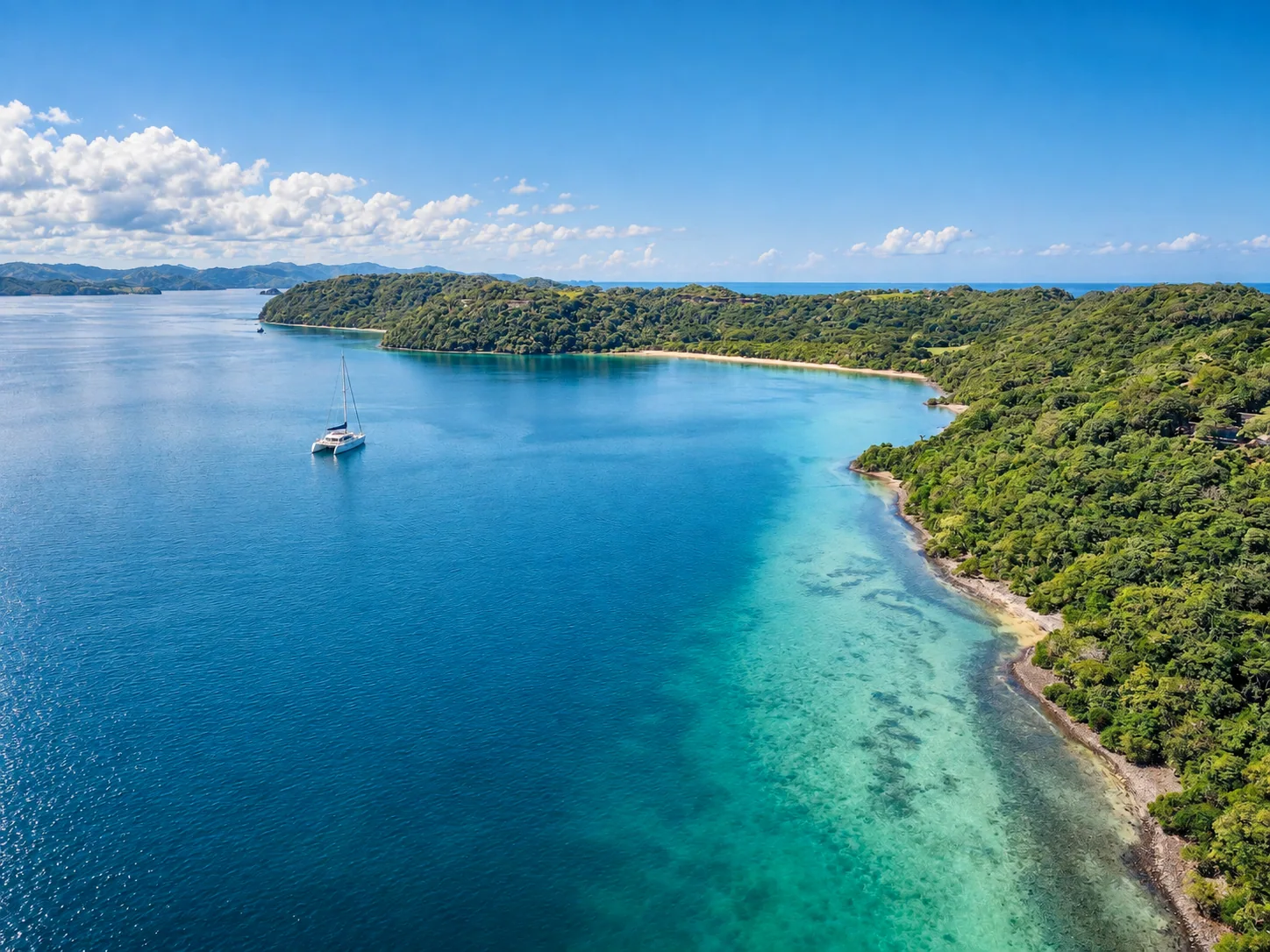
For an easy dive close to Playas del Coco, Las Pelonas is one of our favorite starting points: a short boat ride, rocky underwater scenery and plenty to explore without heading far offshore. Punta Ballenas, between Playa Hermosa and Playa Buena, is another beautiful local site worth asking about. The best choice always depends on visibility, currents and the group's experience.
Catalina Islands
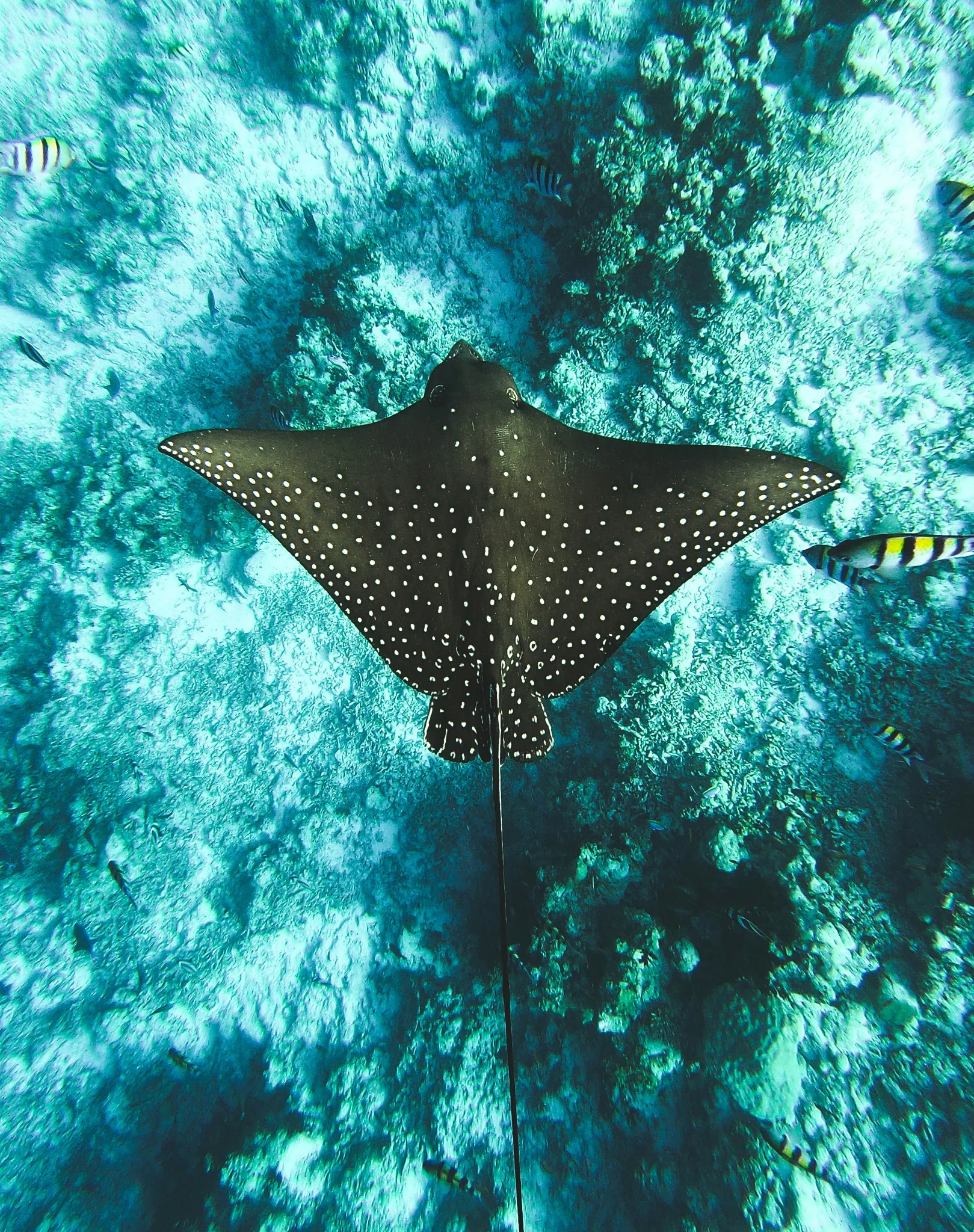
Volcanic formations and nutrient-rich water make the Catalina Islands one of the North Pacific’s better-known dive areas. Giant oceanic manta rays are a seasonal possibility, particularly around the cooler dry-season months, while eagle rays, turtles and large schools of fish add interest year-round. Mantas are wild visitors, not an appointment on the calendar.
Bat Islands (Islas Murciélagos)
The remote Bat Islands, within Santa Rosa National Park's marine area, are renowned for bull shark encounters and exhilarating offshore diving. They are demanding sites, with stronger currents and exposure than the sheltered locations near Coco. The calmer-wind months, especially around May to August, usually give a better chance of organizing a trip; departures always depend on sea conditions and diver experience.
First dives and certification courses
For a first experience underwater, we favor the exceptionally sheltered waters of Jícaro and Playa Nacascolo. Both are protected from ocean swell, making them comfortable places to learn the basics with an instructor when conditions are suitable. Introductory dives and courses from Open Water onwards can be arranged on request, depending on the training professionals available.
When should you dive around Coco?
For us, May, June, July and August are often the sweet spot. The Papagayo winds generally ease, the sea can settle and underwater visibility is frequently better before the heavier seasonal rains.
The seasonal winds can be strong, particularly in the afternoons. They may stir up the water, make boat rides uncomfortable and limit which offshore sites are practical.
Visibility is never guaranteed. Plankton, upwelling, currents and rainfall can change the water even within the same week. A local instructor should make the final call.
This is generally an outing to target during calmer months, often May to August. During windy periods, the exposed crossing can be impractical. Even in the favorable season, departures depend on the forecast and sea state.
Before you book
Provide each participant’s certification, number of dives and most recent dive. The whole group may not be suited to the same offshore site.
Plan enough time after diving before flying or going to altitude. Follow established dive-medicine guidance and your instructor’s recommendation; 18+ hours may be needed after repetitive dives, and longer intervals can be prudent.
No operator can guarantee manta rays or bull sharks. Never chase, touch or feed animals underwater.
Boat capacity and safe diver-to-guide ratios differ. Keep the group within the operator’s limits.
Need a hand planning?
Tell us your dates and every diver’s certification level. We can advise on the right area and coordinate an appropriate small-group trip or training request.
Plan your stay →Helpful references: Dive areas and routes (Costa Rica diving maps) · Guanacaste seasonal information (Costa Rica Tourism Board). Hours, conditions and access can change; always check before you go.